Each year, families across America gather for one of its favorite celebrations: Thanksgiving. While every family’s celebration looks a little different, plenty of familiar traditions have stood the test of time: roasting a turkey, watching the Macy’s Thanksgiving Day Parade, cheering on a football game, and saving room for pie.
But how much has Thanksgiving really changed? From gelatin molds to Turkey Trots, we dove into the history of the holiday and how Thanksgiving now might look a little different from Thanksgiving celebrations 50 years ago.
HOW THANKSGIVING BECAME A TRADITION
Most of us were taught that the history of Thanksgiving was when the Pilgrims and the Native Americans came together to celebrate the fall harvest. Americans traditionally recognize the “first” Thanksgiving as a 1621 feast at Plymouth Colony, when the Pilgrims celebrated their first harvest alongside members of the neighboring Wampanoag tribe.
But Thanksgiving didn’t immediately become an annual holiday. Over the following years, colonies observed days of thanksgiving at different times and for different reasons.
In 1789, President George Washington proclaimed November 26 a national day of thanksgiving, although it was not established as a permanent federal holiday. It wasn’t until the Civil War that President Abraham Lincoln called for a regular national Thanksgiving observance in 1863, setting the stage for the holiday Americans continue to celebrate today.
TODAY’S FEASTS
When you think of Thanksgiving today, you might picture the table decorated and filled with platters of food, a gathering of family, the TV showing the parade or a football game (or two). Or maybe you imagine the morning’s Turkey Trot, dreading or excited for the race. (Married into a Turkey Trot family? Good luck when Thanksgiving rolls around and you have to join the obligatory crowd racing in the chill.)
First, you start the day full of excitement and American spirit. Across the country, people are kicking off the day with colorful parades, live music, and community celebrations. The most famous of all events is the Macy’s Thanksgiving Day Parade in New York City with enormous balloons, marching bands, and dazzling floats.
And for millions of Americans, Thanksgiving celebrations wouldn’t be complete without a game of NFL football. Since the early 20th century, NFL games have been a cornerstone of the Thanksgiving holiday.
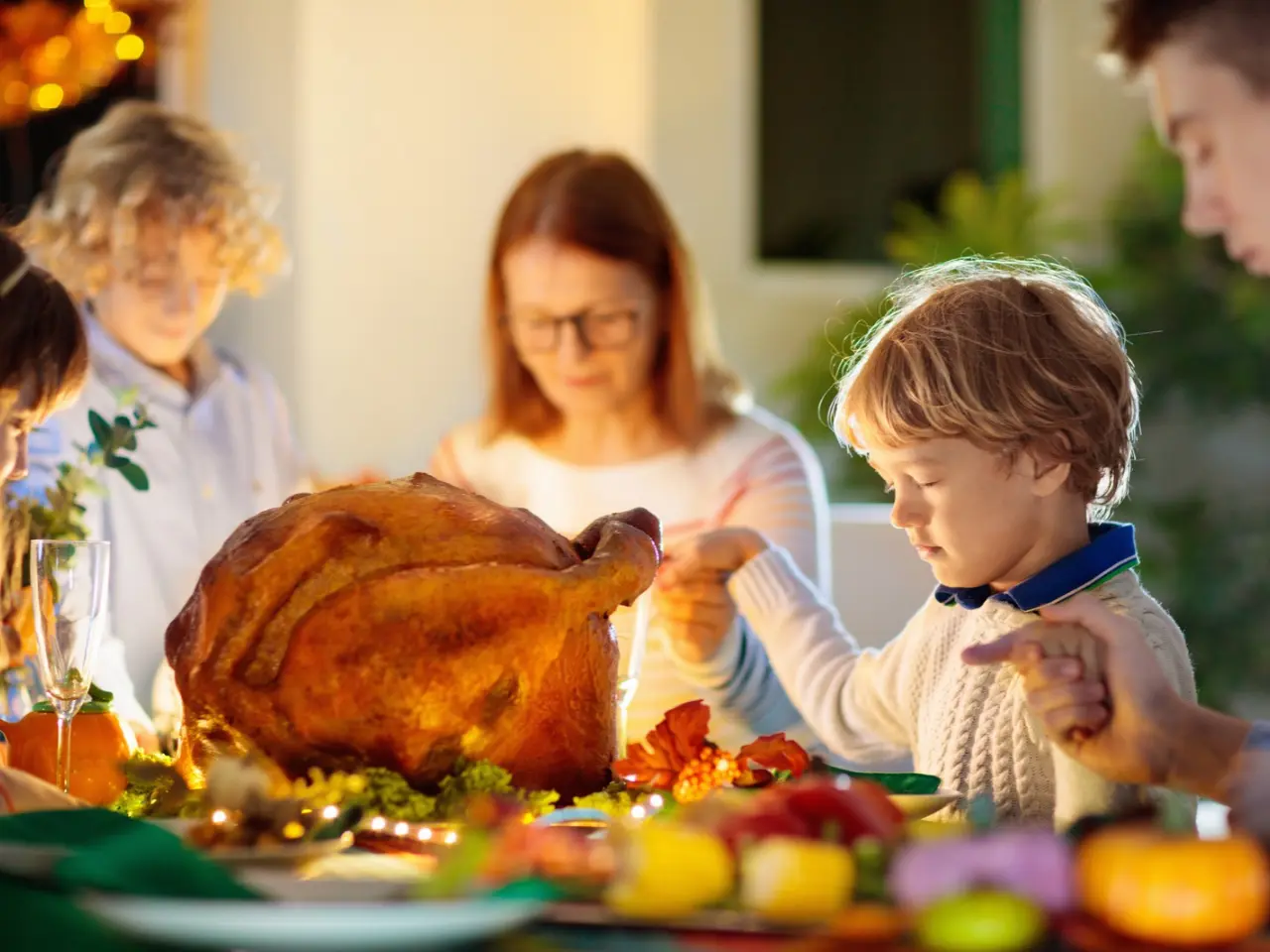
But the Thanksgiving meal is at the heart of the holiday. At the center is almost always a glistening, giant, roast turkey. Joining the turkey are a lineup of delicious sides: creamy mashed potatoes, herb-y stuffing, tangy cranberry sauce, gravy, and sweet potato casseroles topped with marshmallows. It’s like Christmas without the pressure of gifts.
Other traditions include:
■Presidential Turkey Pardon
■Break the wishbone for good luck
■Pumpkin pie
■Black Friday
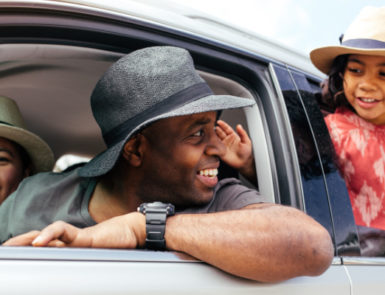
■Traveling to family
Swap the smartphones for a console TV and the running shoes for your Sunday best, and Thanksgiving 50 years ago might look surprisingly familiar.
TRADITIONS PAST
In 1976, Thanksgiving looked about the same, with a few differences. Large feasts were still a staple of the holiday, but with multiple generations pitching in to cook massive, home-cooked meals, making the kitchen the central hub of activity.
The roast turkey was still the centerpiece of the dinner table, and families still tuned in to watch the Macy’s Thanksgiving Day Parade, only on color console televisions in their living rooms. Broadcasted professional football games kept family members gathered around the living room, and breaking the wishbone was the highlight of the night. Even Black Friday, started in the 1950s, was still a popular Thanksgiving tradition.
But there were also plenty of things that were different when it came to Thanksgiving traditions. Let’s start with the food. While dishes still featured cranberry sauce, stuffing, and casserole, it was also filled with gelatin molds. The popular cooking ingredient could be found in dishes like shrimp aspic mold, chicken mousse, cranberry souffle salad, and more. There was always plenty of gelatin to go around.
Aside from food, it was also a tradition to send festive postal cards adorned with turkeys and pumpkins just like the Christmas card tradition.
Before dinner, it was tradition for families to go outside and start a football game to get everyone hungry enough to pack away a lot of food. Families would also share the story of the first Thanksgiving.
As for the Thanksgiving meal itself, in 1976, it was tradition for people to show up in their best dress—suits, ties, Sunday best—and kids had to be on their best behavior (no elbows on the table, no smacking your teeth, and absolutely no back talk). As a formal occasion, hosts also painstakingly wrote out formal place cards for each guest to know their assigned spot at the dinner table.
So whether your Thanksgiving looks more like 1976—Sunday best, handwritten place cards, and a family football game—or 2026, with Turkey Trots, stretchy pants, and a little scrolling between servings, the heart of the holiday hasn’t changed all that much.
Traditions may come and go (and maybe we’re okay leaving the gelatin molds in the past), but Thanksgiving has always been about gathering around the table, sharing good food, and taking a moment to appreciate the people beside us. Fifty years from now, the traditions might look different again—but hopefully, there will still be turkey, pie, and plenty to be thankful for.