This July 4th, the United States celebrates its 250th birthday. A historic milestone commemorating the courage, determination and ingenuity of the American spirit. It’s this creative drive that takes an idea from vision to reality. Here are some of the state’s most interesting and unexpected contributions to everyday American life.
The Boy Scouts and Girl Scouts – Pawhuska and Muskogee, Early 1900s
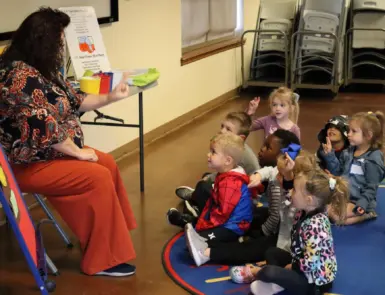
Oklahoma has a quiet but significant claim on both major American scouting traditions. In 1909 — before the Boy Scouts of America was incorporated — Reverend John F. Mitchell organized a 19-member troop in Pawhuska under a British charter, making it one of the earliest Scout troops on American soil. One of the first troops formed under the U.S. charter followed in Muskogee on September 20, 1910. In 1912, future president Woodrow Wilson awarded Muskogee’s Fred Woodson the Eagle Badge — only the seventeenth person in the country to achieve it. As a tribute to the first Oklahoma troop, the Pawhuska Kiwanis Club raised funds for the Scout Memorial, a statue of a uniformed Boy Scout, that stands in front of the Osage County Historical Museum and was dedicated on July 5, 1976.
The Girl Scouts put down roots in Muskogee as well. In 1917, the city’s first troop formed, called the Mistletoe Troop, and began making and selling cookies, creating the model for the Girl Scout Cookie Program nationwide. Muskogee’s Three Rivers Museum features a special “Cookie” exhibit that shares the history of the Mistletoe troop, and a sculpture titled, “A Promise Kept,” depicting a young Girl Scout, stands in front of the building to memorialize the troop’s impact.
The Shopping Cart – Oklahoma City, 1937
Sylvan Goldman grew up in Ardmore and eventually owned a chain of Humpty Dumpty grocery stores. He had a simple theory: people would buy more if they could carry more. His solution was a shopping cart, which he introduced to Oklahoma City customers in 1937. At first, shoppers ignored it — so Goldman hired models to use the carts in stores for customers to see it in action. Eventually people saw the benefits and the shopping cart became a staple of American retail.
The Pressurized Flight Suit – Early 1930s
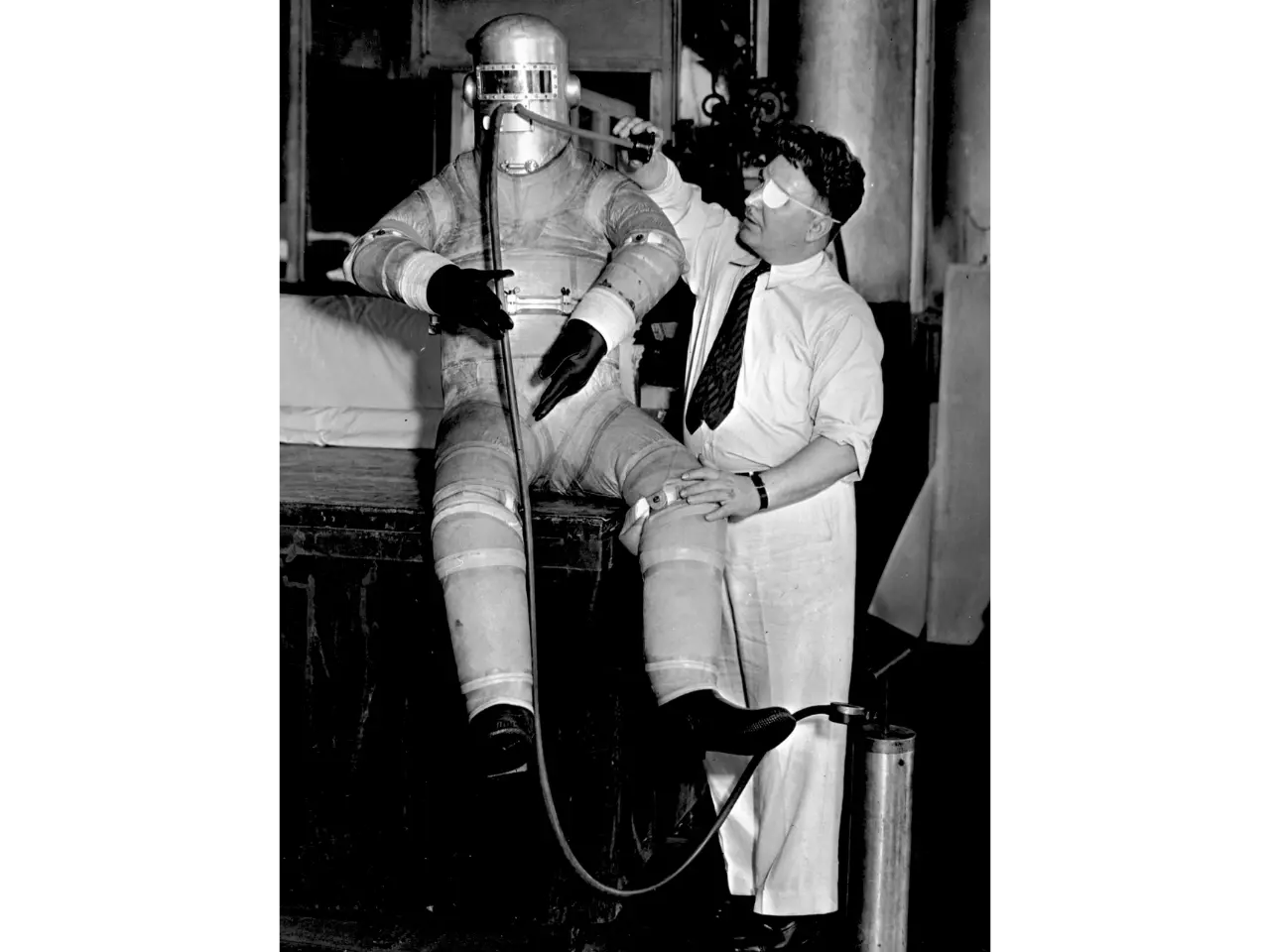
Wiley Post, Oklahoma’s famed one-eyed aviator, was known for his daring flights. In 1933, Post set an around-the-world speed record of 7 days, 18 hours, and 49 minutes. He then set his sights on high-altitude flying. To survive the thin air of high-altitude flights, he developed a pressurized flight suit in the early 1930s — a pioneering piece of technology that became the predecessor to the suits worn by test pilots and astronauts in the 1950s and ‘60s.
The Parking Meter – Oklahoma City, 1935
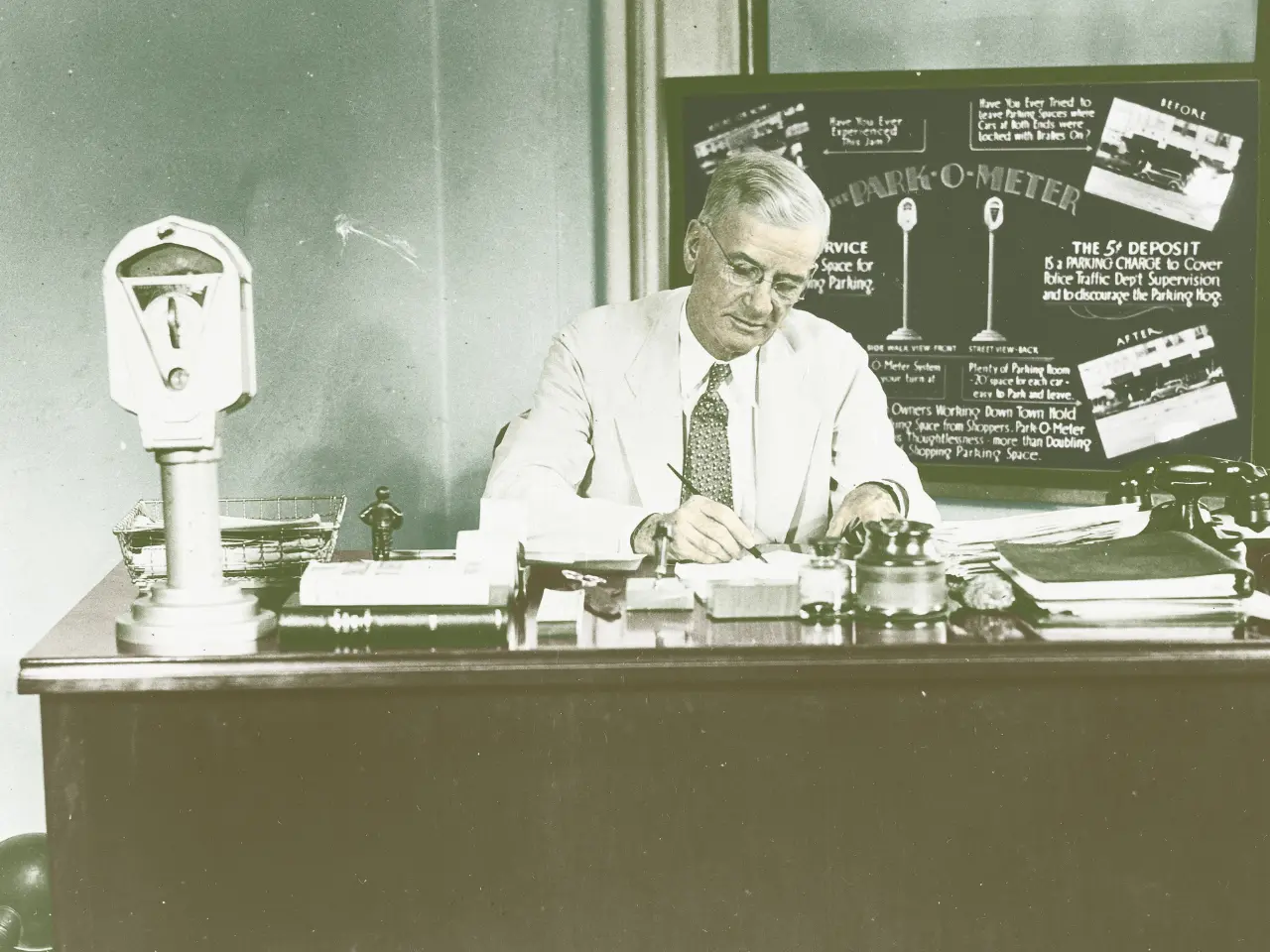
Before parking meters, downtown Oklahoma City was gridlocked. Workers claimed every available spot each morning, leaving retail customers nowhere to park and local businesses struggling. Carl C. Magee, appointed chair of the Oklahoma City Chamber’s Traffic Committee, was determined to fix it — drafting the first concept of a parking meter. He teamed up with the Oklahoma State University Engineering Department to develop a prototype, and on July 16, 1935, 175 meters were installed and tested in downtown Oklahoma City. Deemed a success, parking meters soon spread to cities across the nation and became a permanent fixture of urban life.
The Yield Sign – Tulsa, 1939
While attending Chicago’s Northwestern Traffic Institute in 1939, Tulsa police officer, Chief Clinton Riggs, developed the idea of the yield sign. After further development, he placed the first yield sign at a dangerous intersection in Tulsa in 1950. Within a year, the impact was evident as accidents declined. The triangular sign, now recognized in traffic codes around the world, has guided billions of drivers to slow down and give way — a small but universal piece of
Oklahoma ingenuity.
Ditch Witch – Perry, 1949
What started as a blacksmith shop in Perry became a global leader in underground construction equipment. Carl Frederick Malzahn opened the shop with his sons, and it was son Ed Malzahn — armed with a mechanical engineering degree — who transformed it. In 1949, Ed designed a compact trencher to replace the slow, labor-intensive work of digging utility lines by hand, calling it the Ditch Witch Power trencher. The machine revolutionized how residential utility lines were installed across the country. Today, the company is still based in Perry and is led by Ed’s granddaughter — the fifth generation of the Malzahn family.
Dick Tracy – Pawnee, 1931
Chester Gould was a commercial artist from Pawnee with an eye for what was dominating the headlines — gangsters, bootleggers, and a Chicago police force that seemed one step behind. His answer was a tough, trench-coated detective who could do what real cops couldn’t. He submitted his comic strip under the title Plain Clothes Tracy to the Chicago Tribune–New York News Syndicate; an editor renamed it Dick Tracy, and it debuted on October 12, 1931. The strip ran for decades and made Gould one of the most recognized cartoonists in America.
NEXRAD Doppler Radar – Norman, 1990
Oklahoma’s volatile weather didn’t just inspire meteorologists — it helped produce one of the most important advances in weather forecasting. The NEXRAD (Next Generation Weather Radar) Doppler system was developed and tested in Norman, Oklahoma, led by the NOAA National Severe Storms Laboratory. The lab had been pioneering Doppler radar for tornado and severe weather detection since the 1970s, and an operational prototype went live in Norman in the fall of 1990. That technology now forms the backbone of weather tracking across the United States.
From the parking meter to the pressurized flight suit, Oklahoma’s fingerprints are all over American life. As the country marks 250 years, it’s worth remembering: A lot of what makes daily life work was dreamed up right here.