With all the educational apps, flashcards, tutoring programs, and lists of what a child needs to know before starting school, it is only natural to think that every minute of the day needs to be dedicated to teaching your child letters, numbers, or skills. For ages, playing has been associated with childhood. In today’s world, however, playing may seem to be an activity of luxury rather than necessity. Nevertheless, there is evidence that the opposite is true and has been true for many years. Far from hindering the learning process, playing is the activity that helps a child develop cognitive, social, emotional, and physical skills that can help them learn in the future. According to The Harvard Center on the Developing Child, more than a million new neural connections are formed every second during the first several years of a child’s life; therefore, early experiences help build the brain’s architecture, influencing how children learn, communicate, problem-solve, and build relationships.
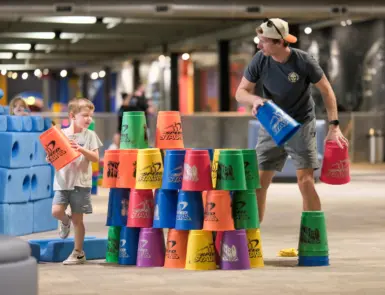
Researchers and educators alike have recognized that play is far more than just entertainment; it’s a way a child tries to understand his or her environment. So whether they are constructing block towers, pretending to run a grocery store in the living room, sorting the rocks they have found outside, or inventing games with their friends and siblings; what they are basically doing is employing all those same processes and skills that are required to read, problem-solve, develop emotional stability, and maintain good relationships. The American Academy of Pediatrics describes play as essential to the healthy development of children because it builds skills in language, social interaction, emotion management, problem solving, creativity, executive function and fine and gross motor abilities.
Prior to knowing multiplication tables and writing persuasive essays, children should first learn attentiveness, cope with frustration, communicate, work cooperatively with other children, and face problems with curiosity not fear. These types of activities promote children’s ability to engage in observation, decision-making, creative thinking, and persistence while keeping them fully engaged in what they are experiencing. Parents often underestimate just how much children are learning through ordinary play. Activities like carrying, throwing, balancing, crawling, and climbing do much more than strengthen muscles. They help children develop coordination, spatial awareness, confidence, and body control, all of which support everyday learning and independence. Families who want to find out more about how play contributes to a child’s motor development can explore additional ideas that connect movement with early childhood growth.
That doesn’t mean every activity needs to have an educational goal or that parents should guide their children’s activities at every turn. In fact, one of the best ways to help children learn is to give them the opportunity to explore their own interests while having caring adults present to foster their curiosity, ask thoughtful questions and occasionally join in themselves. Researchers from Harvard Project Zero define this type of environment as one that encourages curiosity, exploration, imagination and joy of learning versus just finding the right answer. This concept of balancing autonomy and guidance has been a major focus of recent research on play. Professor Paul Ramchandani, Director of the PEDAL (Play in Education, Development and Learning) Centre at the University of Cambridge, has emphasized that play gives children opportunities to explore their own ideas, become more independent, and develop a lifelong love of learning.
Curiosity Leads to Meaningful Learning
One big difference between children and adults is that most of the time children don’t set out to learn anything. Instead, they follow topics that interest them. Alison Gopnik, a developmental psychologist, has observed that children often resemble scientists because both spend time testing hypotheses, analyzing data and revising assumptions based on new data. Both ask questions to get new information. How children seek truth is by repeatedly asking “why.” Every answer leads to a new question and drives the wheels of learning because they want to discover something new. Childhood is a time to experiment without fear of failure and children need to believe that failure is essential for learning. For example, if children build a bridge and it falls down, they will build a different one next time. Studies into playful learning also find this result. Kathy Hirsh-Pasek who has done a lot of research in this area claims that young children learn better when actively participating in discovery.
School Preparation Through Play
Most parents worry that spending too much time at home playing means less time studying or getting ready for school. In reality though, most of the skills that children will use when they start school will develop well before school ever begins. Listening to stories, waiting one’s turn, resolving conflicts with siblings or friends, and staying determined even when things feel difficult affect how well children do when they finally go to school. Furthermore, children start learning important traits like focus, communication skills, confidence and adaptability. Traits that will define their future success in school. It is rare for children to master these skills through repetition alone, typically these skills flourish from experiences where children are required to think creatively and respond to new problems and situations. This is why it’s best to support a child’s natural curiosity without controlling the experience. The notion of guided play can, in fact, often be more effective in teaching kids than direct instruction alone because the adult is actively engaged while the child leads the process of learning through exploration. This finding was highlighted by the Institute of Education Sciences.
Play Provides Language the Space to Grow
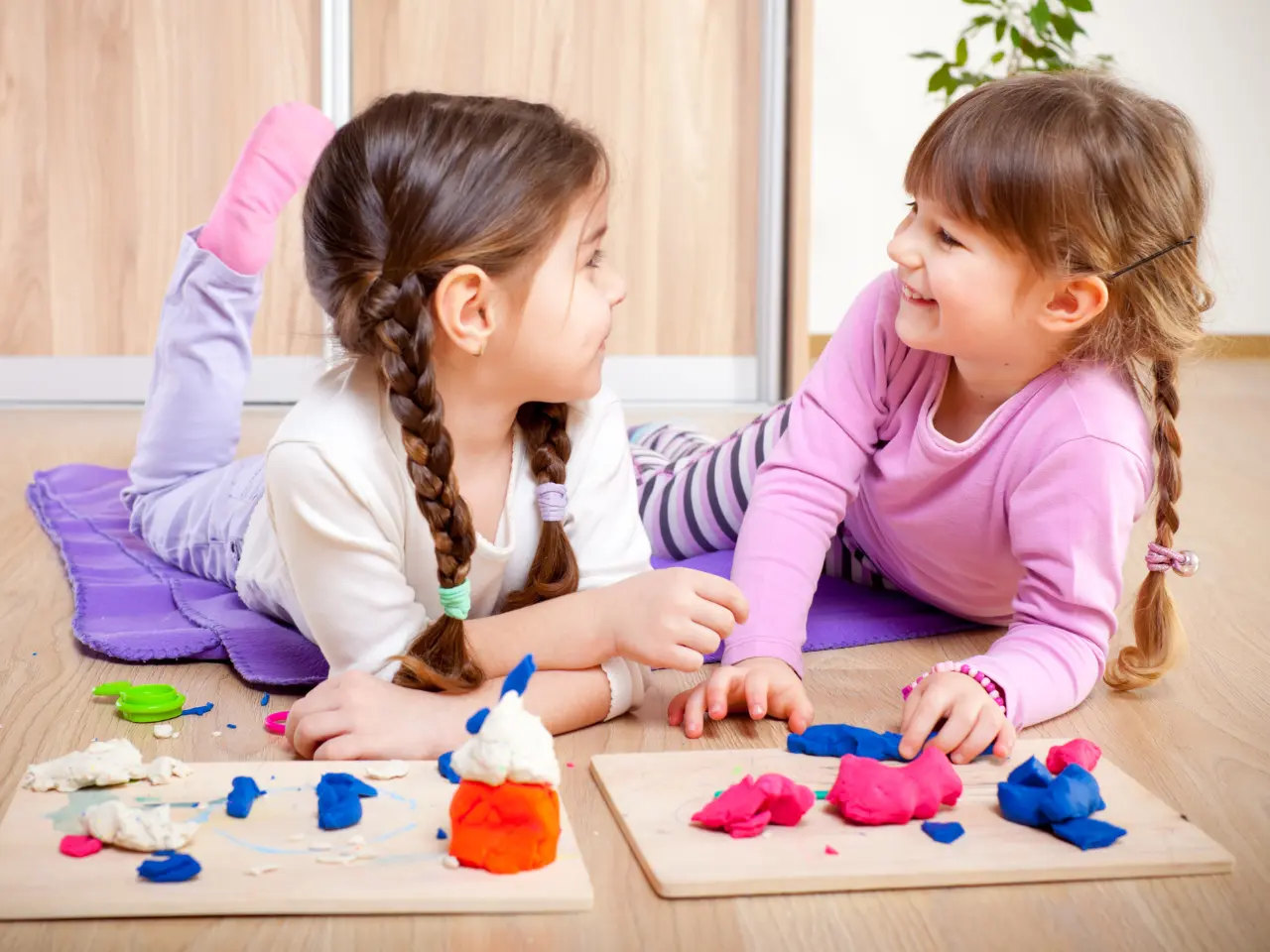
The best thing about play is that children seldom stop talking to one another when fully engaged. If you listen to children building a tower, performing puppet shows, or making up a story about dinosaurs, you will hear much more than fun chatter. Children discuss their plans, experiment with new words, explain things to each other, ask questions, negotiate about certain rules of the game, and tell stories. Pretend play helps children develop their language skills, which are necessary for reading and writing when they grow up. It’s particularly effective too because it challenges children to think about possibilities outside the current situation. A cardboard box is transformed into a spaceship. A stuffed bear becomes a doctor’s office patient. When children define roles and create narratives within their imagined worlds, they are developing ways to organize their thoughts, explain events and consider different perspectives. Conflicts over who gets to be captain or what happens next are also opportunities for children to practice listening, problem solving and respectful communication.
Researchers have long recognized that language develops most effectively through interactions with people and with experiences rather than memorizing facts alone. Interacting with caring adults through conversations, storytelling, singing and imaginative play exposes children to a broader range of vocabulary and grammatical structures while connecting the words to real life experiences. This is why researchers continue to encourage families to spend less time stressing over perfectly planned lessons and more time engaging in conversations, reading together, and playing together.
Creativity and Problem-Solving Often Begin with “What If?”
Some of childhood’s greatest learning moments begin with simple questions like:
- What if we build the bridge this way instead?
- What happens if we mix these colors together?
- How can we make this blanket fort stay up?
Children’s ability to experiment is one of the characteristics that researchers wish to promote. Professor Laura Schulz, Ph.D., Cognitive Scientist at Massachusetts Institute of Technology (MIT), has stated that children are very efficient learners due to their natural curiosity to explore possible answers to questions they have asked. Through play, children formulate hypotheses and test them over and over again. Children do not need long explanations for them to learn new things; they typically learn by doing and seeing the outcome of their actions.
In addition to providing children with opportunities to experiment and learn from failure, open-ended exploratory play provides children with opportunities to develop perseverance. When children complete a project or reach a goal, they are usually motivated internally (i.e., they want to succeed) which provides them with greater motivation than externally rewarded activities. Sometimes, parents worry that children are “only” playing with loose parts such as cardboard boxes, wooden blocks, fabric scraps, or branches they gathered outdoors. However, often, these children have the most creative and imaginative thinking when working with loose parts that require them to come up with new ideas.
Learning to Work with Others Is Part of the Lesson
Academic skills matter, but there are many social and emotional skills necessary to achieve success in both academics and life. Social skills include cooperation, managing frustration, resolving disputes among peers, waiting, recognizing how another person might be feeling. Many social skills can be practiced through open-ended exploratory play. For example, board games teach children that they won’t always win, but they can still enjoy playing. Cooperative construction projects teach children that different ideas can arise from other group members and that compromise may be needed to reach a solution. Team sports and outdoor games teach children teamwork, fairness, and shared responsibility. Pretend play requires children to negotiate roles, adapt to changes, and work toward common goals.
In addition to practicing social skills through play, children can practice emotional regulation. Through their experiences of excitement, disappointment, pride, frustration, and joy, all of which possibly occur multiple times in a day; children develop a sense of emotional awareness. While children are experiencing strong emotions, parents can assist children to recognize their emotions, reflect upon possible solutions to issues caused by them, and eventually develop the confidence to handle difficult situations independently. Children who develop self-regulation skills, persistence skills and positive relationship skills tend to be better prepared for concentration, collaboration with peers and engagement in learning activities. Therefore, emotional lessons learned by children while playing today often become their learning habits tomorrow.
Many people believe that play needs to be structured in order for children to benefit academically. This is simply untrue. Research related to child development has consistently demonstrated that meaningful play occurs through unplanned, non-structured events that occur during everyday family interactions. Daily routines like helping prepare dinner, building a fort from couch cushions, or taking a simple walk through the neighborhood all create opportunities for children to count, compare, observe patterns, solve problems, and ask questions about the world around them. These everyday experiences often become some of childhood’s richest learning moments precisely because they feel meaningful rather than instructional.
Families interested in incorporating hands-on materials into their playtime at home may choose materials that provide open-ended exploratory learning opportunities for children. Learning toys such as building sets, puzzles, sorting games and other types of pattern-based activities often work best when they prompt children to create, experiment and think about solutions in their own way rather than following pre-determined sequences or directions. The ultimate goal is not to engage children in busywork; but to enable them to think, discover and remain curious about the world around them.
Give Children’s Play the Time it Needs to Succeed
The fast-paced “achievement-oriented” society we live in makes parents sometimes wonder whether more structured instruction is always better. However, over three decades of research has pointed to the same conclusion: Play is NOT an interruption to learning. For young children, play is how they do their most productive learning. The strongest foundation for future success can be developed by providing children with ample opportunity to create, build, question, imagine, and collaborate in an environment where curiosity is encouraged rather than a continuous performance. While playing, young children are strengthening their language skills, math thinking, creative expression, emotional resiliency, and social awareness as well as building the courage to take on each new challenge with excitement.
Perhaps the greatest gift play gives children is that its benefits extend long after childhood has ended. Young children are being taught that learning is not just about getting the correct answer. It is about questioning, looking at all possibilities, and finding enjoyment in the journey of discovery. These habits of curiosity could end up being among the most important life-long lessons that they would carry with them throughout school, adulthood and beyond. When children are allowed the freedom to play, they are not leaving learning behind; they are experiencing learning in one of its most natural and meaningful forms.