
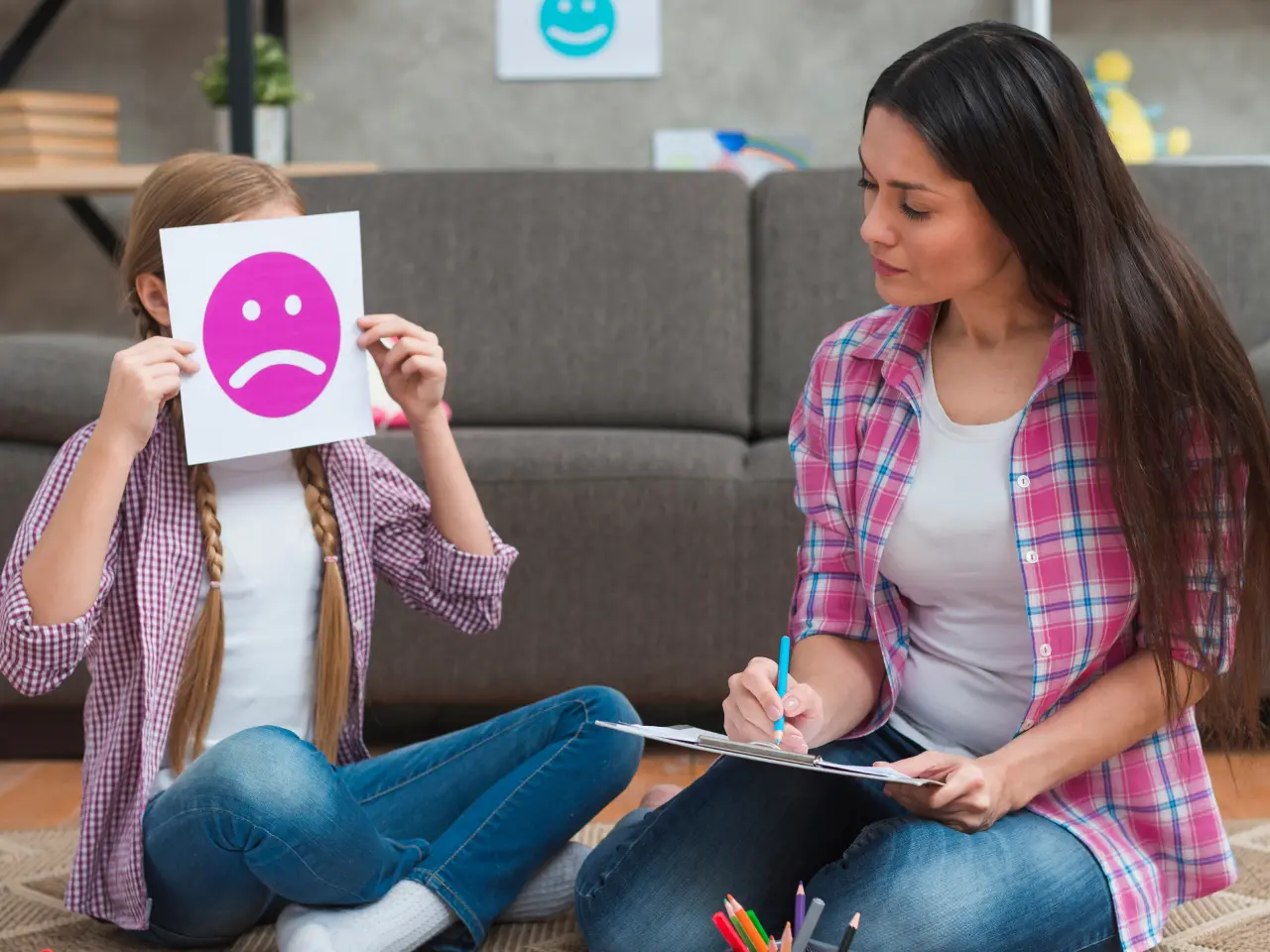
The percentage of kids and teens who go to counseling is on the rise, according to the CDC. And no wonder, with the introduction of smartphones and social media. “About one in five adolescents have a current, diagnosed mental or behavioral health condition,” the National Library of Medicine’s 2024 survey reports. The same data highlights that between 2016 and 2023, the percentage of kids ages 12–17 who were diagnosed with mental or behavioral issues leaped from 15 percent to 20.3.
When Kids Can Benefit from Therapy
Having a safe space is necessary, but don’t discredit yourself: You have the tools you need to help your kid! There are tons of amazing parental resources out there that can help you navigate different coping mechanisms. Having open, honest conversations with your kids can normalize sharing emotions and feelings so they feel safe to open up and say they need help. But sometimes, you just need additional resources—or your kid needs to hear it from a third party instead of
a parent.
It can be hard to distinguish between normal childhood struggles and something that warrants professional support because every child is different. However, if it’s a persistent struggle at home or a teacher notices issues in the classroom, that might be your cue. Another sign a child could genuinely benefit from therapy is if they ask for it.
“Certain life events—divorce, grief, bullying, moving, anxiety, ADHD, trauma—create difficult life stressors,” shares adolescent therapist Chatham Kennedy. “Therapy can provide your children with the right tools to navigate all of the emotions that come with these circumstances.” Similarly, traumatic experiences can lead to overwhelming emotions that are important for children to work through and process while in a safe space.
How Early is Too Early?
There’s not an official age range when it comes to starting therapy. However, you want to make sure to work with someone who specializes in your child’s age. Zero to 17 is quite the age range—even if a therapist’s specialty is children, make sure they focus more on your child’s age or developmental stage.
What to Look for When Choosing a Therapist
“Look for someone that meets your child’s specific needs,” Kennedy says. Whether your child needs help with trauma, ADHD coping skills, or ways to help their anxiety and depression, their therapist should be someone they can relate to, making them a safe space. While it is never the therapist’s job to push their beliefs on someone, you may also want to find a therapist whose values align with your own.
Normalizing Emotions
It is really important for children to experience some level of disappointment or failure without immediately trying to “fix” it. “Our nervous system isn’t meant to be a straight line,” Kennedy explains. “It will be filled with positive highs and unfortunately, some difficult lows, and our goal is to teach kids how to deal with these changes in a healthy way.”
The aim of therapy isn’t to remove the “bad” emotions: none of our emotions are bad, they all serve a purpose. Rather, it is to help kids learn to care for their emotions instead of shying away from the hard or painful feelings.
“A therapist’s job isn’t ever to fix the problem—it’s to empower their client to know they already have all the tools inside of them to tackle the situation at hand, and it’s our job to teach them how to do it,” she adds.
Social Media
There are hundreds of studies that point to the fact that despite living in the most connected age ever, people are lonelier than ever. Add puberty to the mix, and it gets a whole lot worse. “Social media often gives you a false sense of connection,” Kennedy warns. “It tears away the vital benefits of in-person connection.” Even if you don’t allow your child to use social media, they have group chats with their friends—they know when they’re not invited to things. The key thing to remember is that what we have access to can foster mental health or be detrimental to it. The old adage is true: garbage in, garbage out.
A Parent’s Role in Approaching Therapy
Every situation is subjective, so the appropriate involvement for you depends on the situation and age of your child. Nevertheless, there are several things you can do to complement therapy at home:
• Read books: Seek out resources and do your research!
• Ask questions: Figure out the heart behind your child’s actions by asking “Why?”
• Don’t jump to conclusions
• Create a space to process
• Expand therapy’s safe space to the home
• If teens use clinical terms like “trauma,” “triggered,” or “anxiety,” ask them why they are using that language, what those things mean to them, and what that looks like? Get specific.
While the intention of therapy is to help your child, it is also to help equip you to parent well. “So much of therapy with kids involves equipping parents with tools and resources to help their children thrive,” explains Kennedy.
How to Talk About Therapy
Many teachers are leading the way in teaching kids how to talk about emotions. Even still, it can be intimidating to be vulnerable, share your feelings, and admit you need help. So normalize it in your home. Personally, I felt safe to go to counseling because I saw my dad go and open up about it. “Create space for vulnerability and practice healthy transparency,” Kennedy encourages. “If you go to therapy, open up and share how it’s helped you. Additionally, you can practice vulnerability at home by sharing things like ‘Mom had a bad day, and this is what I did to feel better.’”
Don’t make it a big deal, and don’t be afraid to ask about the hard things. If you have littles, explain that just like how they go to the doctor for their physical health, they are going to see a cool new friend with skills to take care of their mental health. (Except it’s more fun because they play games!)
How Long Should Therapy Last?
Remember, therapy doesn’t have to last forever. “My goal as a clinician is for my clients to have the right tools to help navigate complex feelings. We work toward their goals so they can thrive without therapy. When difficult situations arise, they can come back to therapy for additional support,” Kennedy states. Equipping your kids with the opportunity to go to therapy now is like putting tools in their toolbox so that they’ll be prepared when they need them down the road.
Tools & Resources
Books for Parents
• The Anxious Generation by Jonathan Haidt
• Raising Worry-Free Girls by Sissy Goff
• Raising Emotionally Strong Boys by David Thomas
• Good Inside by Dr. Becky Kennedy
• How to Talk So Kids Will Listen & Listen So Kids Will Talk by Adele Faber & Elaine Mazlish
Books for Kids
• The Grand Hotel of Feelings by Lidia Branković
• The Color Monster by Anna Llenas
• Ruby Finds a Worry by Tom Percival
• A Little SPOT of Emotion series by Diane Alber
Movies & TV
• Inside Out and Inside Out 2
• Toy Story 5 (if discussing emotions and relationships)
• Elemental (explores belonging, identity and family expectations)
• Bluey (great conversation starter for emotional regulation and family relationships)
Helpful Apps
• Calm
• Headspace
• Smiling Mind (free mindfulness app for kids and teens)
• Finch (self-care and habit-building for older kids and teens)